
Royal Life Saving Queensland, as a founding member of ARC, is pleased to support it’s workshop on 17 November 2026. Please click on the link below to find out more and register for the workshop.
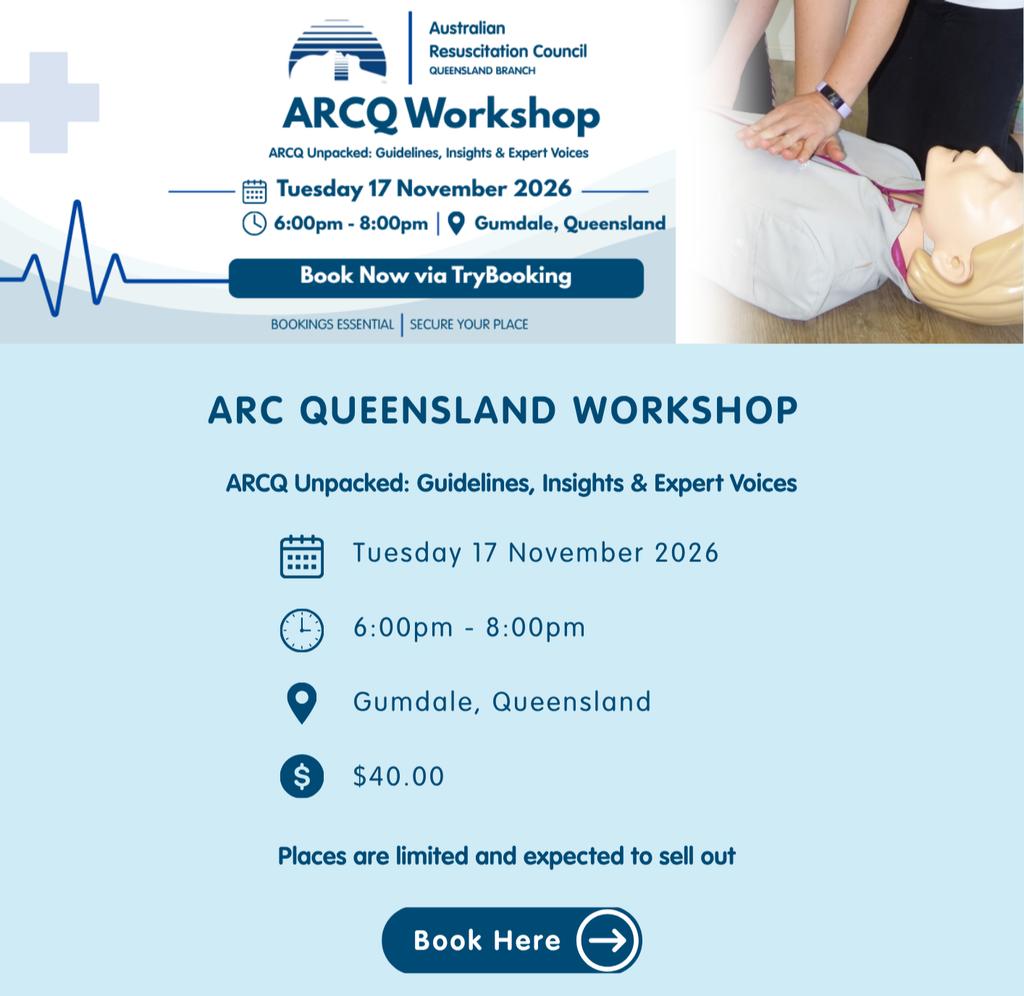
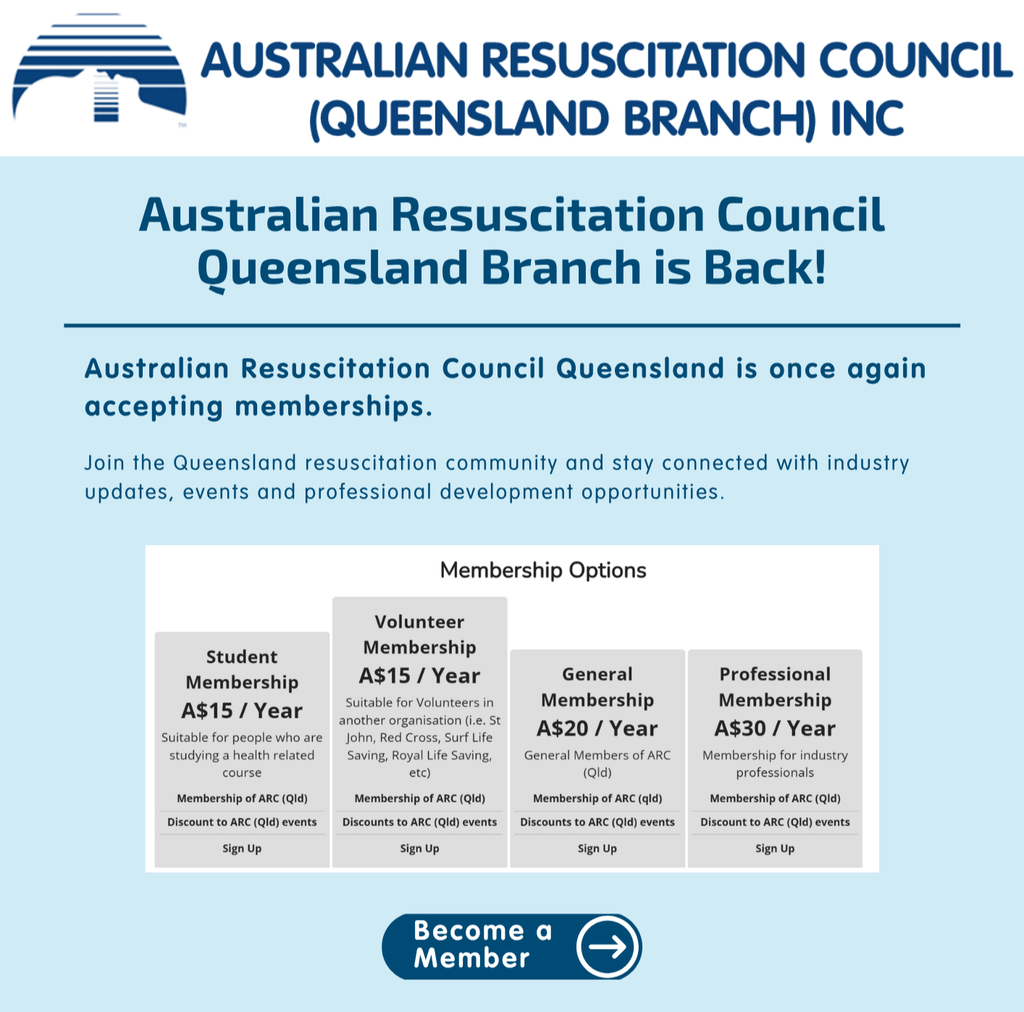

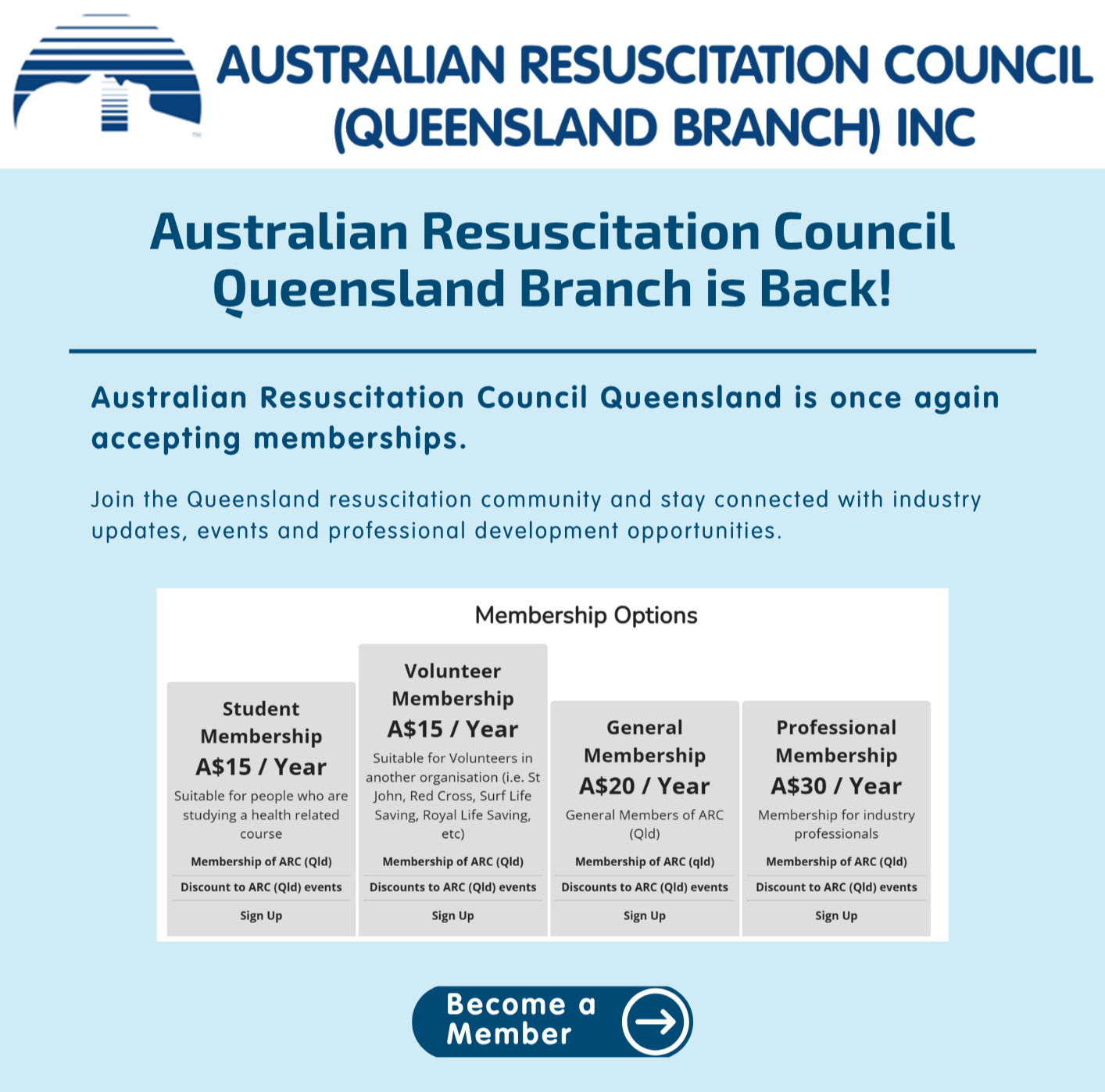
Royal Life Saving Queensland, as a founding member of ARC, is pleased to support it’s workshop on 17 November 2026. Please click on the link below to find out more and register for the workshop.
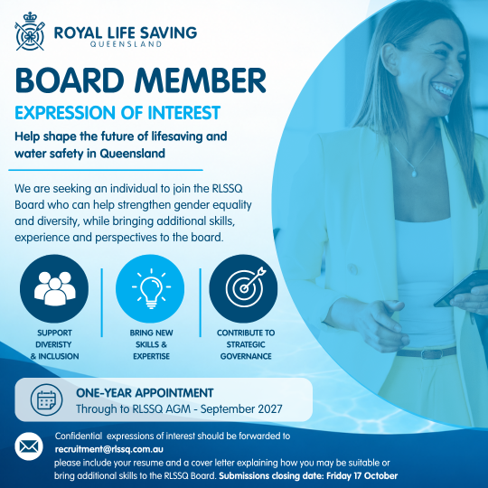
Royal Life Saving Society Queensland (RLSSQ) is seeking expressions of interest for a Board Member to join our organisation and contribute to the future direction of water safety and lifesaving in Queensland.
We are looking for an individual who can help strengthen gender equity and diversity on the Board, while bringing valuable skills, experience, and perspectives to complement our existing Board.
About the opportunity:
🔹 Appointment through to the RLSSQ AGM in September 2027
🔹 Opportunity to contribute to the governance and strategic direction of RLSSQ
🔹 Bring your professional expertise, experience and perspective to an organisation dedicated to saving lives and building safer communities
We welcome expressions of interest from people who believe they can make a meaningful contribution and bring additional skills, knowledge, or experience to the RLSSQ Board. No board experience is necessary, this position is suitable to some who is new to a board role, or has experience in a board role.
Confidential expressions of interest should be submitted to: recruitment@rlssq.com.au
Please include:
✔️ Your current resume
✔️ A cover letter outlining your suitability for the role and the additional skills, experience or perspective you could bring to the RLSSQ Board.
Applications are confidential.
If you are passionate about making a difference and would like to contribute at a governance level to Queensland’s leading lifesaving organisation, we would love to hear from you.
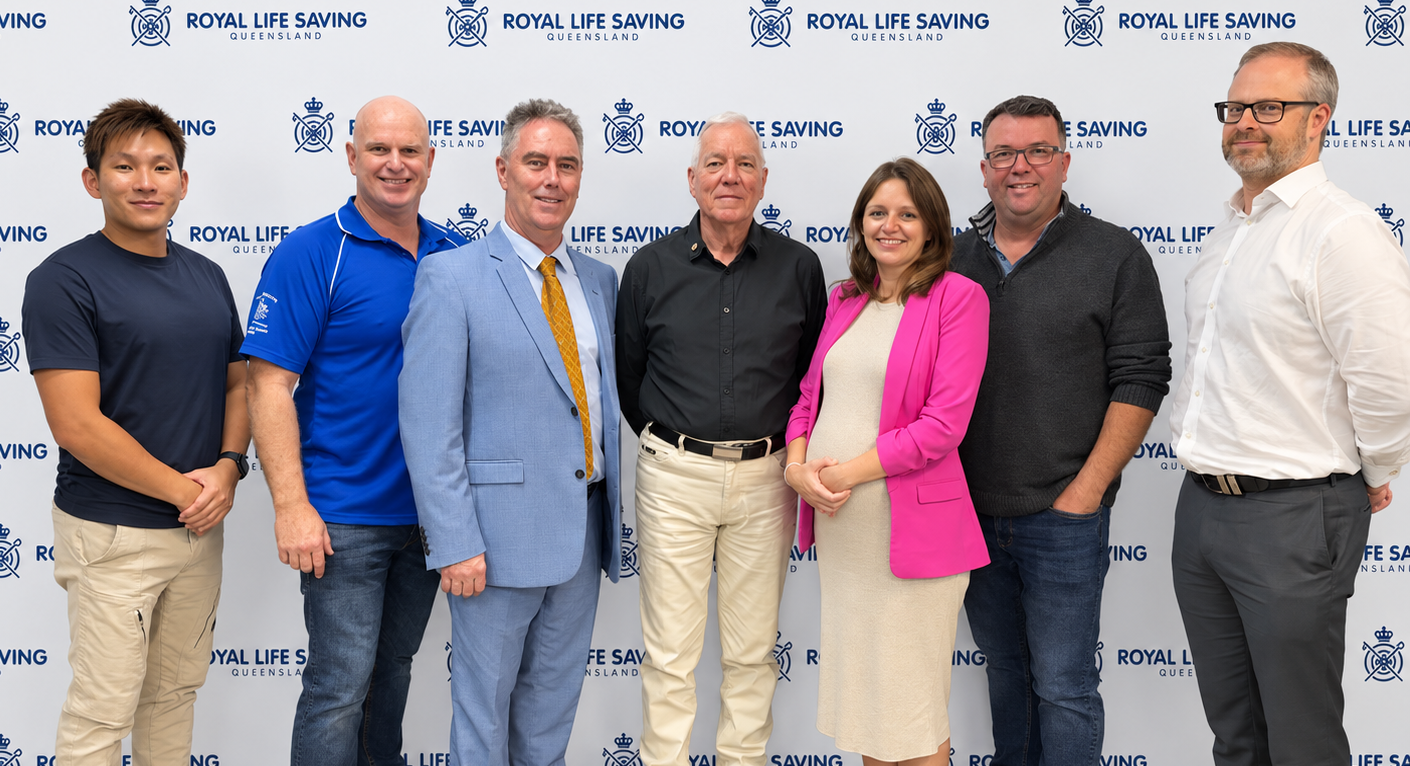
Royal Life Saving Queensland is pleased to announce the updated board of directors following the Annual General Meeting, held on Thursday 17 September 2026:
| Position | Name |
|---|---|
| President | Mr James McClelland BM OAM |
| Deputy President | Mr Michael Darben |
| Secretary | Mr Luke Daly |
| Treasurer | Mr Colin Harris |
| Director | Mr Andrew Chan |
| Director | Mrs Izzie Forsyth |
| Director (additional) | Mr Tim Goward |
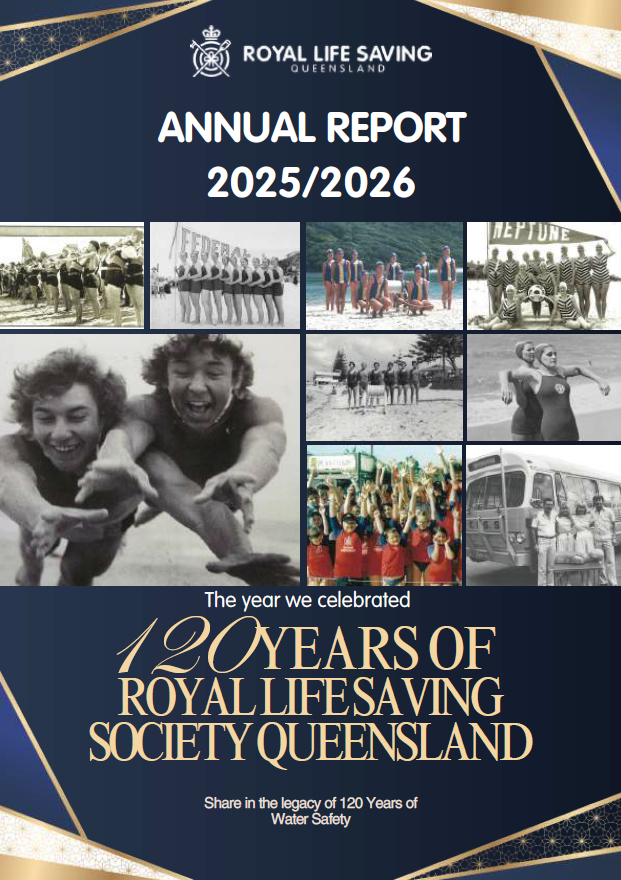
Royal Life Saving releases it’s annual report for the financial year (June 2026). The society continued to provide increased services to the Queensland community, with significantly increased activity in community programs, training and other activity.
Society President, Ms Nicky Sloan said “As I write my final President’s Report for Royal Life Saving Society Queensland, I am proud of the progress we have made and confident in the position of the organisation today. Over recent years we have strengthened our governance, improved our financial position, invested in our assets, grown our industry relationships and continued to deliver programs that make a genuine difference across Queensland.“
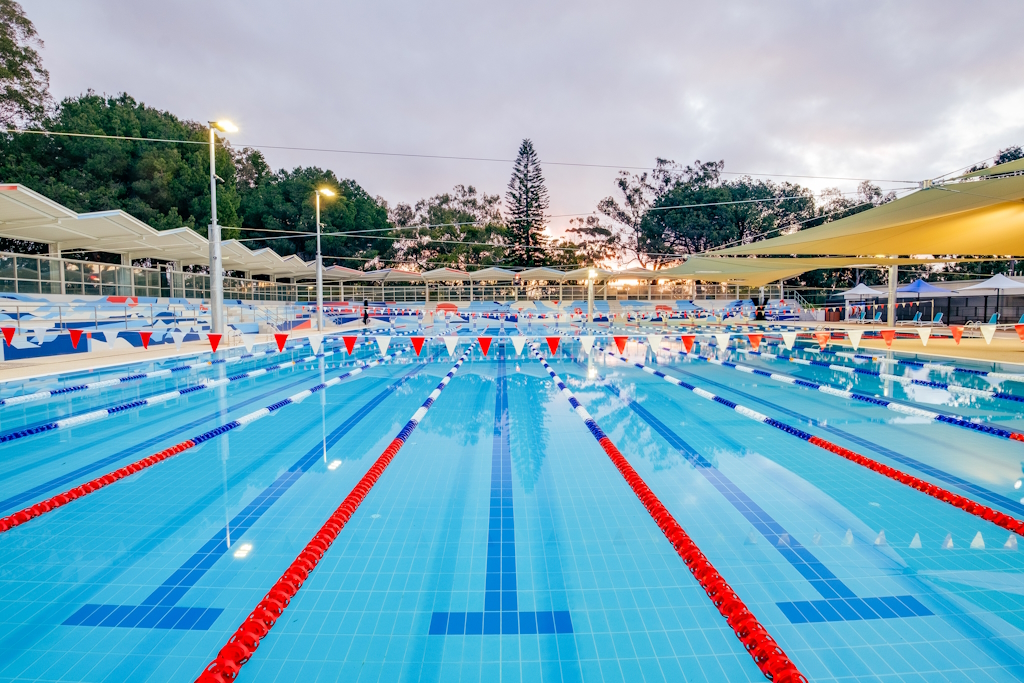
💧 HAVE YOUR SAY: Proposed national water quality standard for swimming pools
A proposed Australian Standard that would set consistent water quality requirements for both residential and public swimming pools is now open for public comment.
Standards Australia has released Draft AS 3633:2026 Residential and public pools – Water quality, which aims to provide a consistent framework for water quality, testing, disinfection, record keeping and responding to contamination incidents across Australia.
The proposed standard would replace the existing AS 3633-1989 and provide guidance developed specifically for Australian conditions, helping create greater consistency for pool owners, aquatic facility operators, regulators and the community.
🏊 Who should have their say?
Aquatic facility owners and operators, local governments, health regulators, swim schools, industry professionals and pool owners are encouraged to review the draft and consider how the proposed requirements could work in practice.
Royal Life Saving Society Queensland supports measures that contribute to safer and healthier aquatic environments and encourages those with relevant technical and operational expertise to participate in the consultation.
Draft AS 3633:2026 Residential and public pools – Water quality is available for review and comment through the Standards Australia public comment portal
Public comment closes 21 October 2026.
Your experience and expertise can help shape a practical standard for Australia’s pools and aquatic facilities.
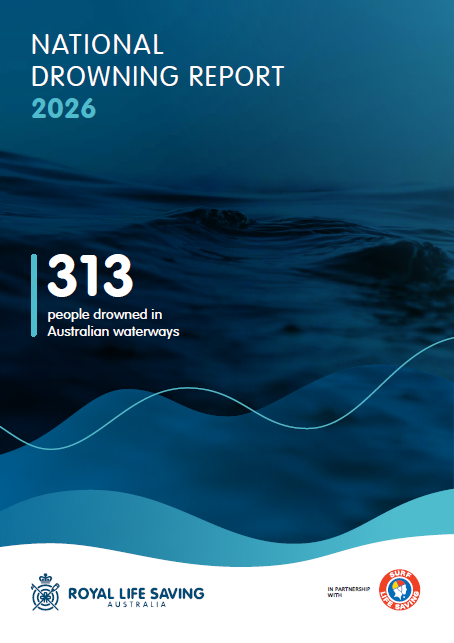
313 lives lost to drowning as new report highlights persistent risks ahead of summer
Australia recorded 313 drowning deaths in 2025/26. While this is an improvement on the record 357 deaths reported in 2024/25, the toll remains unacceptably high, still 10% above the 10-year average.
The Natonal Drowning Report 2026, published by Royal Life Saving Australia in partnership with Surf Life Saving Australia, shows the naton is not on track to meet the 50% drowning reducton target set by the Australian Water Safety Strategy 2030.
Drowning deaths among children under five fell to 11 fatalites, 39% below the 10-year average, a result of sustained investment in pool fencing, legislation, and public education. 55% occurred in backyard swimming pools.
Children aged 5-14 years had the lowest drowning rates, but drowning rates rises rapidly among adolescents and young adults. Thirty-four people aged 15-24 years drowned, 3% above the 10-year average.
Older Australians accounted for almost one third (30%) of all drowning deaths, with 95 people aged 65 years and older drowning in 2025/26. Drowning rates were above the 10-year average for every age group over 45 years, with those aged 65-74 recording the highest rate of any cohort.
Almost half of all drowning deaths occurred in coastal locations – beaches, ocean and rocks – accounting for 151 deaths (48%), including 66 deaths at beaches. One in three drowning deaths were in inland waterways (90 deaths or 29% of the total), including 68 deaths in rivers and creeks, where currents, submerged hazards and steep drop-offs often surprise swimmers.
Significant inequalities persist. Drowning rates were twice as high among people living in the most disadvantaged areas, and almost three times higher in regional areas compared to cities. Where country of birth was known, 39% of people who drowned were born overseas.
Royal Life Saving Australia and Surf Life Saving Australia say the report points to three deeper shifts already reshaping drowning risk in Australia, trends that will accelerate over the next decade unless addressed now. They cite declining swimming and water safety skills, an ageing population, and the effects of a changing climate as factors driving increases in drowning.

We would like to invite members to the Annual General Meeting (AGM) of the society which will be held on Thursday 17 September 2026 at The Plantation, 1204 New Cleveland Road, Gumdale Qld 4154, commencing at 7.00 pm. Please find attached the Notice and Agenda for the AGM.
You can also attend the meeting virtually, via Microsoft Teams:
________________________________________________________________________________
Microsoft Teams meeting
Join: https://teams.microsoft.com/meet/448934663433191?p=JDS1RQuJ2hu1nJr0aV
Meeting ID: 448 934 663 433 191
Passcode: fb6MP7za
For help, watch this YouTube Video on how to join a Microsoft Teams meeting.
If you have not yet renewed your membership for this season, you can renew your membership by completing the membership renewal form.
Please would you forward any apologies by email to admin@rlssq.com.au.
If you have any questions please contact us on (07) 3823 2823 or email admin@rlssq.com.au.
On behalf of
Mr Luke Daly
The Honorary Secretary
Royal Life Saving Society Queensland Inc
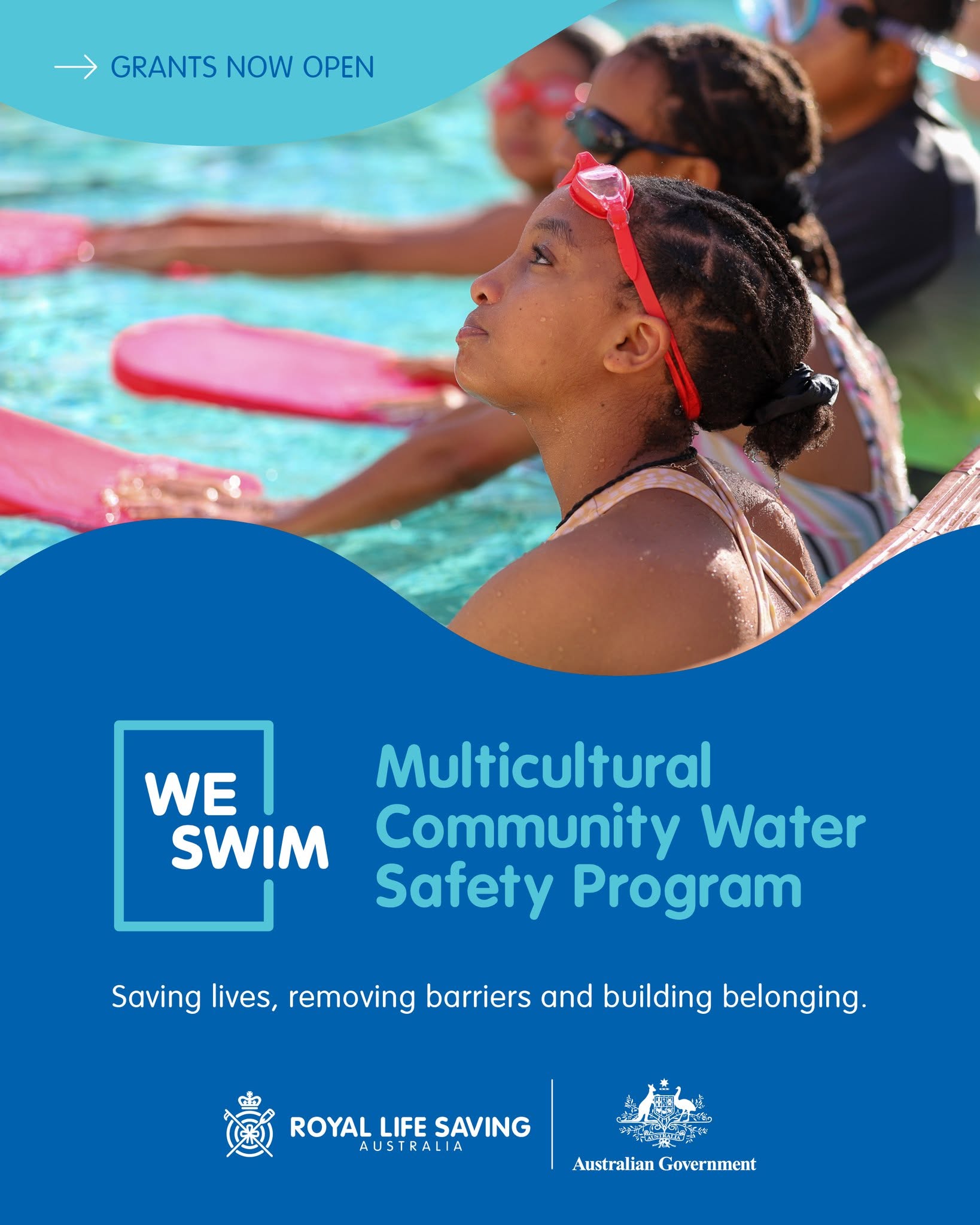
Royal Life Saving Society – Australia is opening applications for the WE SWIM Multicultural Community Water Safety Program to partner with councils, water safety groups, aquatic centres and swim schools, multicultural community organisations, settlement services, swimming and lifesaving clubs, schools and universities.
Royal Life Saving Society – Australia has launched the WE SWIM Multicultural Community Water Safety Program. The new national initiative, backed by $5 million in Australian Government funding, aims to reduce drowning risk, remove barriers to water safety education, and build belonging for refugees, recently arrived migrants and multicultural communities.
People born overseas account for one in three drowning deaths. Half of Australian children cannot swim 50 metres or float for 2 minutes by the end of primary school, a problem that is known to be greater in multicultural communities.
For refugees and recently arrived migrants, the risk of drowning is compounded by unfamiliarity with the hazards on Australian beaches and in rivers, language and cultural barriers, and the cost of lessons.
Local swimming pools and beaches can feel daunting and overwhelming, meaning many people from multicultural communities miss-out on the benefits of being able to swim.
If left unaddressed, this elevated drowning risk can often pass down through generations.
Royal Life Saving Australia will provide funding for community activities that build bridges between multicultural communities and local aquatic venues, make venues welcoming, spread water safety messages through trusted voices, and remove barriers to swimming and water safety lessons.
“Being able to swim at the local pool, river or beach on a hot day, on holidays, or on a day trip is a quintessential part of being Australian. Yet for too many refugees and migrants, accessing a local pool to build those skills can be daunting, and the consequences of not being able to swim, can be tragic.
“WE SWIM is how Royal Life Saving Australia is closing that gap, working with councils, aquatic centres and community organisations to reduce downing risk and build a sense of belonging around water, for refugees, recently arrived migrants and multicultural communities.
“We thank the Australian Government for backing this program with a $5 million investment.”
“Each life lost to drowning is an avoidable tragedy. Swimming and water safety education are critical skills for Australians of all backgrounds and all stages of life.
“The Albanese Government is delivering on our election commitment to invest $5 million to fund WE SWIM, which will break down barriers for multicultural communities, build belonging and save lives.
“In Australia, we love to be on, in and around the water. That’s why we are proud to support Royal Life Saving Australia, community organisations and local swim centres to deliver WE SWIM.
“This investment means everyone has access to water safety education so our beautiful beaches, pools and waterways can be enjoyed safely and responsibly.”
“For most Australians, swimming and spending time around water is part of who we are. But for many migrants and their children, it can be overwhelming and unsafe when they haven’t had the chance to learn water safety.
“This program helps change that. WE SWIM gives multicultural communities the skills to stay safe, the confidence to enjoy our beaches and pools, and the sense of belonging that comes from being part of Australia’s water culture.”
Royal Life Saving Australia is inviting councils, water safety groups, aquatic centres and swim schools, multicultural community organisations, settlement services, swimming and lifesaving clubs, schools and universities, to apply for:
A smaller number of targeted WE SWIM Pathfinder pilots, including some targeting holiday intensive programs, and a refugee settlement integration pilot will also test new approaches.
Interested organisations can access grant guidelines at contact the WE SWIM team directly at www.royallifesaving.com.au/WESWIM or weswim@rlssa.org.au.
Royal Life Saving Society – Australia is the national peak body for water safety and drowning prevention, with a focus on bringing people together to eliminate drowning and empower communities to be safe around water.
Media enquiries:
Dr Justin Scarr | Chief Executive | Royal Life Saving Society – Australia | 0408 434 011 | jscarr@rlssa.org.au
.
cvvv.
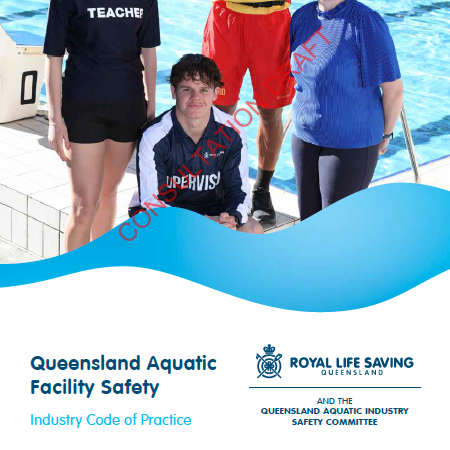
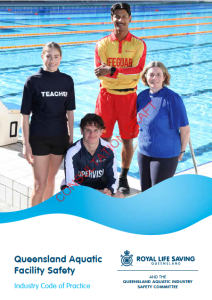
Aquatic facility owners and operators across Queensland are being invited to read a new industry-developed Code of Practice for the safe operation of public aquatic facilities, now released in draft.
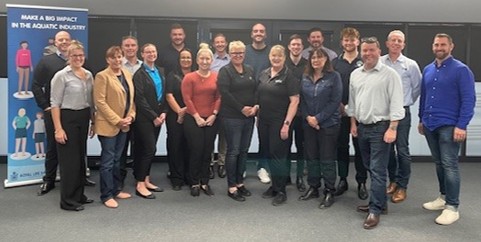
Developed over two years by the Queensland Aquatic Industry Safety Committee (QAISC), the draft Queensland Aquatic Facility Safety Industry Code of Practice is proposed to become Queensland’s first Code of Practice of its kind. It consolidates existing research, regulator, coronial and case law recommendations, industry learnings and recognised guidance into a single, practical document, and reflects the collective view of the industry on the reasonable and practicable measures publicly accessible swimming pools should have in place to protect visitors and patrons.
The Code responds to a number of high-profile, preventable and tragic drowning incidents at publicly accessible swimming pools across Queensland, and to ongoing discussion across multiple industry and government forums.
It has been developed through an extensive collaborative process, facilitated by Royal Life Saving Society – Queensland, bringing together local governments, major facility operators, peak training and water safety bodies, and state government agencies. Contributors include Central Highlands Regional Council, City of Gold Coast, City of Logan, City of Moreton Bay, City of Townsville, Sunshine Coast Council, Belgravia Leisure, BlueFit, City Venue Management, The Y, Sleeman Sports Complex / Stadiums Queensland, AUSTSWIM, Swim Coaches and Teachers Australia, Royal Life Saving Society – Australia, Queensland Health and Workplace Health and Safety Queensland.
The Code is not intended to replace legislation or existing regulatory requirements. Rather, it informs owners, operators and duty holders how they can meet their legal obligations under the Work Health and Safety Act 2011, the Work Health and Safety Regulation 2011 and the Public Health Act 2005. Building on Royal Life Saving’s Guidelines for Safe Pool Operations, the Code helps operators interpret and apply that recognised guidance to aquatic facilities of differing scale and complexity, providing practical direction that can be tailored to facilities with varying but often similar contexts, risk profiles and operational demands.
.
Brad Page, General Manager Venues and Events at City of Logan, said the Code would help councils uphold safety as the foundation of how community aquatic facilities are procured and managed.
“Most public pools are owned by councils but operated externally under contract, which highlights the importance of clear roles, expectations and accountability across all parties involved in facility operations” Mr Page said.
“This Code provides councils and operators with a shared framework to support safe operations, strengthen collaboration and deliver positive community outcomes over the long term.”
Tim Goward, from City of Gold Coast, said the Code provided a strong foundation that could continue to evolve alongside advances in aquatic safety.
“A Code like this gives the industry a consistent, practical reference point, and it should keep pace with emerging best practices which support safety” Mr Goward said.
“This code lays out practical considerations for pool owners and operators to take which enhance safety in line with community and regulatory expectations and industry best practice.”
Paul Barry, Executive Director at Royal Life Saving Queensland, said the Code reflected a shared commitment across the industry to safer aquatic facilities.
“Every drowning at a public aquatic facility is preventable, and behind the data are families and communities who have experienced real loss.” Mr Barry said
“This Code is the product of years of collaboration and a genuine, shared commitment to protecting the people who use Queensland’s aquatic facilities. We encourage everyone across the sector to take the time to read it, reflect on what it means for their own facilities, and consider how they can be part of that shared commitment to keeping communities safe.“
.
Feedback on the draft is welcome and will help refine the document before it is finalised. Royal Life Saving will continue to facilitate this collaborative process, supporting the Committee to consider any feedback received and refine the Code ahead of publication. The Code, and its governance through the Queensland Aquatic Industry Safety Committee, will be formally reviewed every two years to ensure it remains aligned with contemporary safety practice, emerging risks and community expectations.
The consultation period is open until Sunday 27 September 2026.
.
To participate:
Step 1: Access the Draft Queensland Aquatic Industry Code of Practice.
Step 2: Review the document.
Step 3: Complete the online feedback form.
Every submission will be considered as part of the final review process undertaken by the Queensland Aquatic Industry Safety Committee.
.
.
If you have any questions regarding the consultation process or the draft Queensland Aquatic Industry Code of Practice, please contact:
Royal Life Saving Queensland
Subject: Draft Industry Code of Practice Enquiry
Email: aquaticservices@rlssq.com.au
Phone: 07 38232823
The City of Gold Coast has once again demonstrated its commitment to aquatic safety excellence, with all participating aquatic venues achieving Platinum Endorsement through the Royal Life Saving Queensland Platinum Pools Program.
The Platinum Pools Program recognises aquatic facilities that achieve the highest standards in safety, risk management, supervision, and operational excellence. Platinum Endorsement is the highest level of recognition available under the program and is only awarded to facilities that achieve One Hundred percent compliance and maintain exceptional safety performance across consecutive years of assessment. Facilities undergo a rigorous assessment process that includes an Aquatic Facility Safety Assessment, mystery guest evaluations, and compliance with industry best practice standards and legislation.
In 2026, seven City of Gold Coast aquatic venues successfully achieved Platinum Endorsement, marking another significant milestone for the City’s aquatic operations and reinforcing its position as a leader in aquatic safety across Queensland.
The venues achieving Platinum Endorsement are:
Royal Life Saving Queensland State Manager Nikki Thornhill congratulated the City of Gold Coast and venue teams on their achievement.
“Achieving Platinum Endorsement across all participating venues is an outstanding result and reflects the strong safety culture embedded throughout the City’s aquatic operations,” Ms Thornhill said.
“Gold Coast Mayor Tom Tate said the achievement reinforces the city’s reputation for having world-class aquatic facilities.
“Safety is paramount and this result reflects our continued commitment to providing safe, accessible and high-quality spaces for residents and visitors to enjoy the water,” Mayor Tate said.
“These Platinum Endorsements recognise the professionalism, dedication and hard work of our staff and external partners in maintaining industry-leading standards across our aquatic centres.”
Since the introduction of the Platinum Pools Program in Queensland in 2021, City of Gold Coast aquatic venues have consistently achieved outstanding results, helping to establish a benchmark for aquatic safety and operational excellence across the state.
For further information on the Platinum Pools Program, visit the Royal Life Saving Australia website.
© Royal Life Saving Society Queensland Inc ABN 60 478 008 791 RTO 5431