
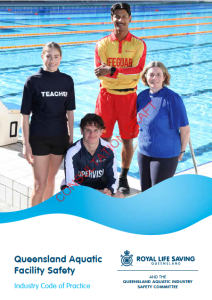
Queensland Aquatic Industry Facility Safety Code of Practice
Industry Consultation Now Open
Aquatic Facility Safety Code of Practice released for consultation in Queensland
.
cvvv.
Aquatic facility owners and operators across Queensland are being invited to read a new industry-developed Code of Practice for the safe operation of public aquatic facilities, now released in draft.
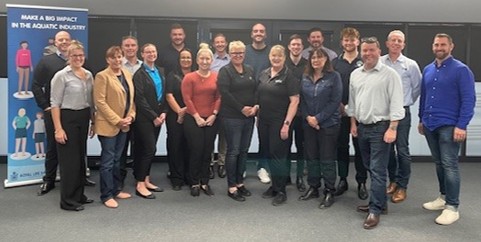
Developed over two years by the Queensland Aquatic Industry Safety Committee (QAISC), the draft Queensland Aquatic Facility Safety Industry Code of Practice is proposed to become Queensland’s first Code of Practice of its kind. It consolidates existing research, regulator, coronial and case law recommendations, industry learnings and recognised guidance into a single, practical document, and reflects the collective view of the industry on the reasonable and practicable measures publicly accessible swimming pools should have in place to protect visitors and patrons.
The Code responds to a number of high-profile, preventable and tragic drowning incidents at publicly accessible swimming pools across Queensland, and to ongoing discussion across multiple industry and government forums.
It has been developed through an extensive collaborative process, facilitated by Royal Life Saving Society – Queensland, bringing together local governments, major facility operators, peak training and water safety bodies, and state government agencies. Contributors include Central Highlands Regional Council, City of Gold Coast, City of Logan, City of Moreton Bay, City of Townsville, Sunshine Coast Council, Belgravia Leisure, BlueFit, City Venue Management, The Y, Sleeman Sports Complex / Stadiums Queensland, AUSTSWIM, Swim Coaches and Teachers Australia, Royal Life Saving Society – Australia, Queensland Health and Workplace Health and Safety Queensland.
The Code is not intended to replace legislation or existing regulatory requirements. Rather, it informs owners, operators and duty holders how they can meet their legal obligations under the Work Health and Safety Act 2011, the Work Health and Safety Regulation 2011 and the Public Health Act 2005. Building on Royal Life Saving’s Guidelines for Safe Pool Operations, the Code helps operators interpret and apply that recognised guidance to aquatic facilities of differing scale and complexity, providing practical direction that can be tailored to facilities with varying but often similar contexts, risk profiles and operational demands.
.
Brad Page, General Manager Venues and Events at City of Logan, said the Code would help councils uphold safety as the foundation of how community aquatic facilities are procured and managed.
“Most public pools are owned by councils but operated externally under contract, which highlights the importance of clear roles, expectations and accountability across all parties involved in facility operations” Mr Page said.
“This Code provides councils and operators with a shared framework to support safe operations, strengthen collaboration and deliver positive community outcomes over the long term.”
Tim Goward, from City of Gold Coast, said the Code provided a strong foundation that could continue to evolve alongside advances in aquatic safety.
“A Code like this gives the industry a consistent, practical reference point, and it should keep pace with emerging best practices which support safety” Mr Goward said.
“This code lays out practical considerations for pool owners and operators to take which enhance safety in line with community and regulatory expectations and industry best practice.”
Paul Barry, Executive Director at Royal Life Saving Queensland, said the Code reflected a shared commitment across the industry to safer aquatic facilities.
“Every drowning at a public aquatic facility is preventable, and behind the data are families and communities who have experienced real loss.” Mr Barry said
“This Code is the product of years of collaboration and a genuine, shared commitment to protecting the people who use Queensland’s aquatic facilities. We encourage everyone across the sector to take the time to read it, reflect on what it means for their own facilities, and consider how they can be part of that shared commitment to keeping communities safe.“
.
Feedback on the draft is welcome and will help refine the document before it is finalised. Royal Life Saving will continue to facilitate this collaborative process, supporting the Committee to consider any feedback received and refine the Code ahead of publication. The Code, and its governance through the Queensland Aquatic Industry Safety Committee, will be formally reviewed every two years to ensure it remains aligned with contemporary safety practice, emerging risks and community expectations.
Consultation Process
The consultation period is open until Sunday 27 September 2026.
.
To participate:
Step 1: Access the Draft Queensland Aquatic Industry Code of Practice.
Step 2: Review the document.
Step 3: Complete the online feedback form.
Every submission will be considered as part of the final review process undertaken by the Queensland Aquatic Industry Safety Committee.
.
.
Questions?
If you have any questions regarding the consultation process or the draft Queensland Aquatic Industry Code of Practice, please contact:
Royal Life Saving Queensland
Subject: Draft Industry Code of Practice Enquiry
Email: aquaticservices@rlssq.com.au
Phone: 07 38232823
© Royal Life Saving Society Queensland Inc ABN 60 478 008 791 RTO 5431