Royal Life Saving is offering the following courses:
CPP31218 – Certificate III in Swimming Pool and Spa Service
CPP41319 – Certificate IV in Swimming Pool and Spa Service
The next Course is:
Course Dates:
Monday 7 – Friday 18 March 2022
This course may be completed in a quicker time frame depending on course numbers and skills and knowledge of participants. This course is subject to minimum number which will be confirmed one week before course commencement.
Course Design:
This course is designed for staff already working in a commercial aquatic centre. It is not designed to be delivered to student who have no experience in a commercial aquatic centre. This course is not contextualised for staff working in a pool shop, or for those working in the pool construction industry.
Download the course enrolment form here, complete the form and send it to us. We will contact you following receipt of the form and discuss the course with you.
View the Course Brochure (which includes the course outline) here which includes more details and information about the course.
This course complies with our Position Statement in respect to the qualifications required when operating a commercial aquatic facility. This statement is a result of the release of Queensland Healths water quality guidelines for public aquatic facilities (dated December 2019). The purpose of the guideline is to reduce risk to public health and the focus is on water quality associated risks.
Worksafe Queensland has issued an alert that covers a range of issues surrounding safety at swimming pools.
We would like to remind pool operators that they should manage health and safety risks by:
Conducting an aquatic supervision risk assessment
Preparing a supervision plan
Providing trained pool lifeguards, pool supervisors and first aid officers
Ensuring young people or people with limited swimming competency such as children are accompanied by adults who need to supervise them
Ensuring children under five years of age are constantly supervised by an appropriate parent/guardian who is prepared to swim (adequate supervision means the parent/guardian must accompany the child in the water and always remain within arm’s reach)
Ensuring children under ten years of age are constantly accompanied by an adult while in the aquatic area
Ensure unsupervised children under five years of age are removed from the water and placed in a safe area until collected by the parent/guardian
Ensuring an unsupervised child of poor swimming ability, regardless of age, is removed from the water by a staff member
Royal Life Saving is offering the following courses:
CPP31218 – Certificate III in Swimming Pool and Spa Service
CPP41319 – Certificate IV in Swimming Pool and Spa Service
Course Dates:
Monday 17 – Friday 28 January 2022 This course may be completed in a quicker time frame depending on course numbers and skills and knowledge of participants. This course is subject to minimum number which will be confirmed one week before course commencement.
Download the course enrolment form here, complete the form and send it to us. We will contact you following receipt of the form and discuss the course with you.
View the Course Brochure (which includes the course outline) here which includes more details and information about the course.
With the start of Summer marking National Water Safety Day, Australia’s political leaders and peak water safety authorities Surf Life Saving Australia, and Royal Life Saving Society – Australia, are urging Australians to make water safety awareness a priority this Summer.
In a strong show of bipartisan support, the Prime Minister of Australia the Hon. Scott Morrison and the Opposition Leader Anthony Albanese, have thrown their support behind National Water Safety Day as Australians are expected to flock to the coastline, pools, rivers and lakes over summer.
In 2020, the Australian Government declared the first day of Summer, 1 December, National Water Safety Day, in a bid to encourage all Australians to make water safety a priority and in 2021 have again shone a light on the need for vigilance around the water.
Between July 2020 and June 2021, despite COVID-19 there was an increase in drowning deaths across Australia (294) with an increase of 20% on the previous year (245).
The highest number of drowning deaths occur during the months of summer with Australians making the most of the coastline, pools, rivers and lakes.
Last Summer (December – February) 101 people lost their lives due to drowning, with the summer accounting for 34% of all drowning deaths across 2020-21.
Surf Life Saving Australia CEO, Adam Weir, said with many people excited to be able to travel and enjoy what Australia has to offer across its vast coastline and beaches, it is important to be vigilant around the water.
“Australians love the water, it is part of so many communities and family activities particularly over summer,” said Weir.
“After spending the greater part of the past two years restricted by COVID-19 we know that Australians will be keen to get to the beach and explore different areas, but we are asking the public to consider their safety around the water this Summer.
“We want Australians to get out and enjoy themselves in the water and have fun but be mindful of the steps and actions they can take to keep themselves and others safe.
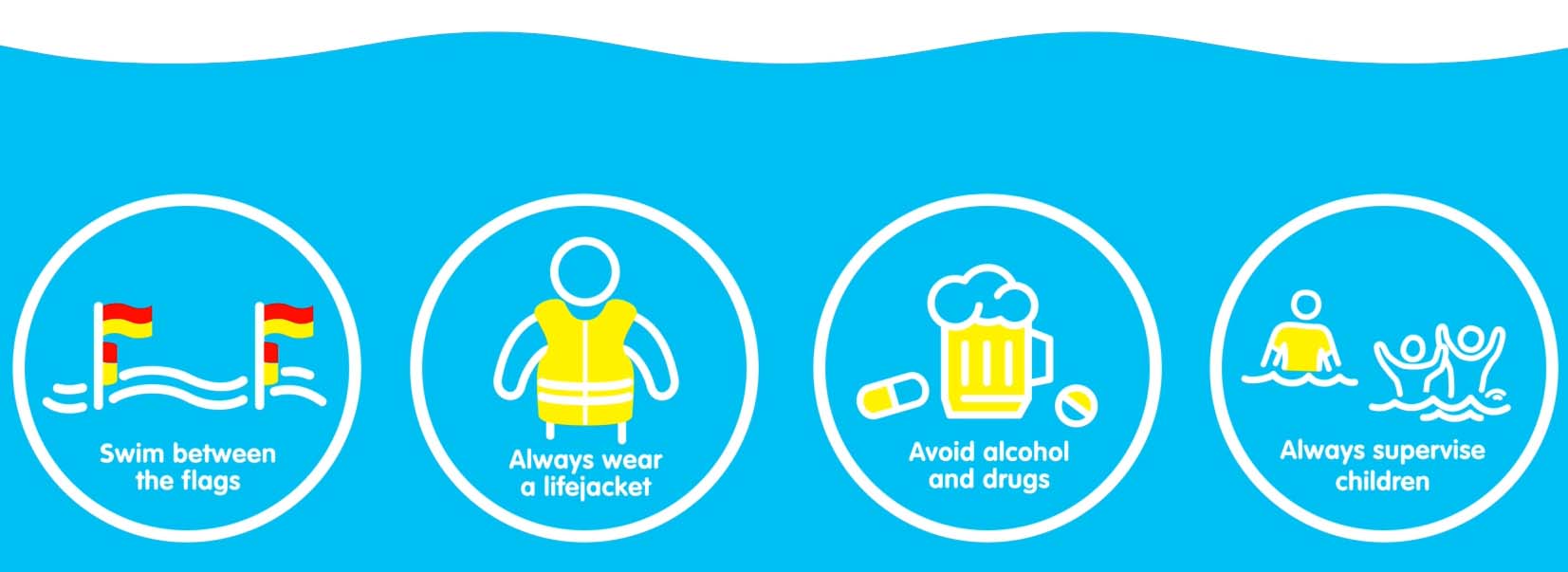
“Simple actions like supervising children at all times on, in and around water, swimming at a patrolled location between the red and yellow flags, avoiding alcohol and drugs while swimming and wearing a lifejacket while boating and fishing are all things that can be done to minimise the danger of drowning this summer.”
Royal Life Saving Society Australia, CEO Justin Scarr said children were at increased risk of drowning over summer and required constant supervision around swimming pools and inland waterways.
“When supervising children around the pool, river or lake this summer, always make sure they have your full attention and avoid distractions. Remember, kids can’t help themselves around water, you need to Keep watch,” Scarr said.
“Even small amounts of alcohol can affect behaviour, swimming ability and increase the risk of drowning. We are urging Australians to make the right call and avoid alcohol around water this summer.
“Some simple actions to help make water safety a priority on National Water Safety Day include enrolling children in swimming lessons, checking the pool fence and gate, or checking the Royal Life Saving or Surf Life Saving websites for information about water safety over summer.”
Prime Minister of Australia the Hon. Scott Morrison PM said that he wants all Australians to enjoy the water safely this summer.
“On this National Water Safety Day, I want to remind you of three things that will keep us all safe this summer.
“One, if you’re not sober don’t swim! 80 percent of all drownings are blokes and alcohol is a big contributor to that number.
“Two, wear a lifejacket if you’re boating, rock fishing in particular or paddling.
“Thirdly, swim at a patrolled beach and do so between the flags, they are there for your safety.
“Now these aren’t big things but they can make all the difference. We’ve all had a long year, so let’s just really enjoy this summer but let’s do it safely. Enjoy the water, let’s stay safe, have a great summer Australia,” he said.
Minister for Sport, Minister for Senior Australians and Aged Care Services Richard Colbeck, said National Water Safety Day helped reinforce an important message.
“The sharp increase in drownings last summer was a solemn reminder of the risks we all face when we enter the water,” Minister Colbeck said.
“Each death has far-reaching consequences for the family and friends left behind. The tragic toll also serves as a reminder that we should never be complacent.
“With a busy summer ahead – have fun and enjoy the holiday season – but stay vigilant, follow the safety advice and look out for each other.”
Key Actions and Safety Tips for Summer 2021/22:
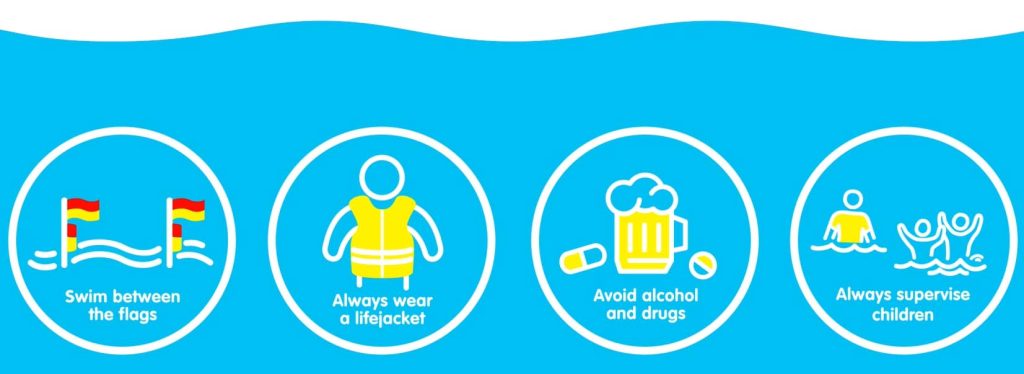
Swim at a patrolled beach between the red and yellow flags – surf lifesavers or lifeguards are there to help if you get into trouble
Wear a lifejacket if you are going boating, rock fishing, or on watercraft
Avoid alcohol and drugs while undertaking water activities
Always supervise children on, in and around water at all times
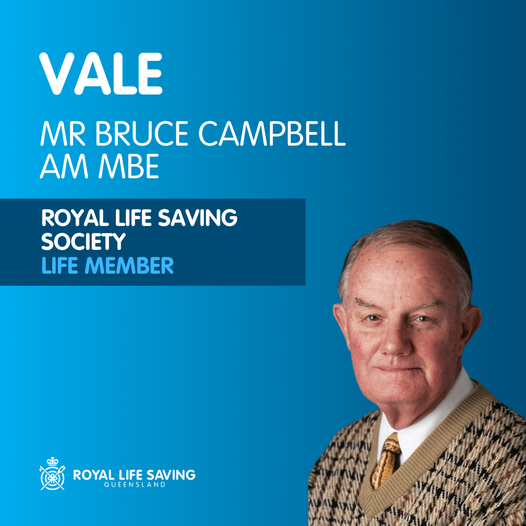
Royal Life Saving Society – Australia is deeply saddened to learn of the passing of Mr Bruce Campbell AM MBE. Mr Campbell was a life member and past President of RLSS Queensland.
Mr Campbell was very active in both Royal Life Saving and Surf Life Saving movements. For many years his name has adorned a trophy presented to the ‘Official of the Meet’ at the Australian Pool Life Saving Championships. Many Royal Life Saving members will remember Mr Campbell well. His service was recognised by RLSS QLD in 2005 when he was named lifesaver of the century.
Bruce Campbell grew up in Longreach, QLD, where he learnt everything about swimming in the Thomson River. In 1948 he moved to Brisbane, and was invited by a close friend to visit their Life Saving Club – Metropolitan Caloundra. Bruce joined the club after finding the experience “infectious” – not realising at the time the extent to which it would impact on his life, and that of many others. He described the world of lifesaving as “replete with unforgettable experiences and strong friendships and a part of my life in which I found myself associating with an army of committed volunteers at least equal to the finest in the country“.
Speaking on behalf of the RLSS QLD Board, current President Mr Les Mole said “After years of active service, participating in an array of society competitions – both pool and beach, seeing the progression of numerous lifesaving techniques and equipment, overseeing the society as President and so much more, Mr Bruce Campbell will be remembered as a leader and friend”.
Mr Campbell was a great champion for rural communities in Australia. He organised Australia’s Year of the Outback in 2002, a highly successful initiative that celebrated the community spirit of country Australians. In recognition of this lifelong contribution to so many community causes, he was made the Australian Senior of the Year in 2003.
K.M.Smith Funerals will be holding a livestream to the funeral this Saturday the 27 November 2021 commencing at 10:30am.
To view livestreaming, please click the link below:
Royal Life Saving Australia released its annual report today (23/10/2021) at the National AGM which was held via teleconference. The reports detail’s the successes of Royal Life Saving throughout Australia, and the state and territory members (branches).
Ahead of the industry’s first ‘living with covid’ summer, the National Aquatic Industry Committee (NAIC) has endorsed updated guidelines on managing the risk of COVID-19 in aquatic facilities and swim schools.
THE UPDATED GUIDELINES COME INTO EFFECT ON 15/11/2021.
Throughout 2020-2021, the NAIC has met frequently to apply extensions to pool lifeguard, swim teacher and aquatic program instructor licenses and re-accreditations as well as discuss the ongoing needs of the aquatic industry to prepare for the transition.
Speaking of the update, Royal Life Saving Society – Australia (RLSSA) National Manager – Aquatics, RJ Houston stated that the Guidelines provide practical guidance on ways that aquatic facilities and swim schools can maintain safe environments for their patrons.
“As Australia transitions to ‘living with COVID’ all workplaces must find a ‘new normal’ and must continue implementing measures to reduce the spread of the virus, respond to the re-emergence of cases and to play their part in preventing health systems from being overwhelmed,” Mr Houston said.
The aquatic industry has been significantly impacted by lockdown closures associated with COVID-19. As one of the first industries to close and last to re-open each time, an estimated 2,113 aquatic facilities were forced into closure at some point throughout 2020 causing a high proportion of the 67,000 strong workforce, particularly frontline workers, to be stood down.
To assist with this transition, it was agreed by the NAIC that an update to the existing Guidelines for Safe Pool Operations (GSPO): Managing the Risk of COVID-19 in Aquatic Facilities was needed.
The COVID-19 Guidelines are not intended to prescribe specific approaches, but instead seek to help businesses determine what is appropriate for their individual workplaces and circumstances. All workplaces must always follow the rules that apply in their State or Territory.
An updated draft of the COVID-19 Guideline was provided to the committee on 2 September. A feedback form and copy of the Guidelines was circulated to GSPO subscribers and published via Australasian Leisure Management, the RLSSA website, RLSSA and NAIC members’ social media accounts and an EDM newsletter, inviting public comment and feedback.
“The industry provided a great response to the public comment stage of the updated Guidelines. More than 120 comments and feedback have been provided via Royal Life Saving to the NAIC, with every comment considered by the NAIC and RLSSA in re-drafting the Guidelines,” concluded Mr. Houston.
The NAIC voted to endorse the updated Guideline on 13/10/2021.
Learn to Swim Instructors (Casual – at Gumdale and Burpengary)
We are looking for casual Lifeguards for our facility at Gumdale and Redcliffe. We can provide training for suitable applicants. Applicants must be available to work over December and January (including Public Holidays).
With the industry projected to grow into the future, it is a great industry to get involved in with lots of opportunities to grow your career and make a meaningful impact in your community. Entry level courses to become a swim teacher, pool lifeguard or one of the many support and office-based roles are relatively quick and won’t break the bank, and you may even be able access government support.
Aquatic industry roles help to make a positive impact on people’s lives. They allow you to work all over Australia calling on the many soft skills you may already have from previous jobs or teaching you skills if it is your first job. For example, communication, teamwork, customer service, problem solving have an important role to play in the aquatic industry.
You too can make a big impact in a meaningful role in this industry.
Join 67,000 new colleagues in the aquatic industry today.
With the industry projected to grow into the future, it is a great industry to get involved in with lots of opportunities to grow your career and make a meaningful impact in your community. Entry level courses to become a swim teacher, pool lifeguard or one of the many support and office-based roles are relatively quick and won’t break the bank, and you may even be able access government support.
Aquatic industry roles help to make a positive impact on people’s lives. They allow you to work all over Australia calling on the many soft skills you may already have from previous jobs or teaching you skills if it is your first job. For example, communication, teamwork, customer service, problem solving have an important role to play in the aquatic industry.
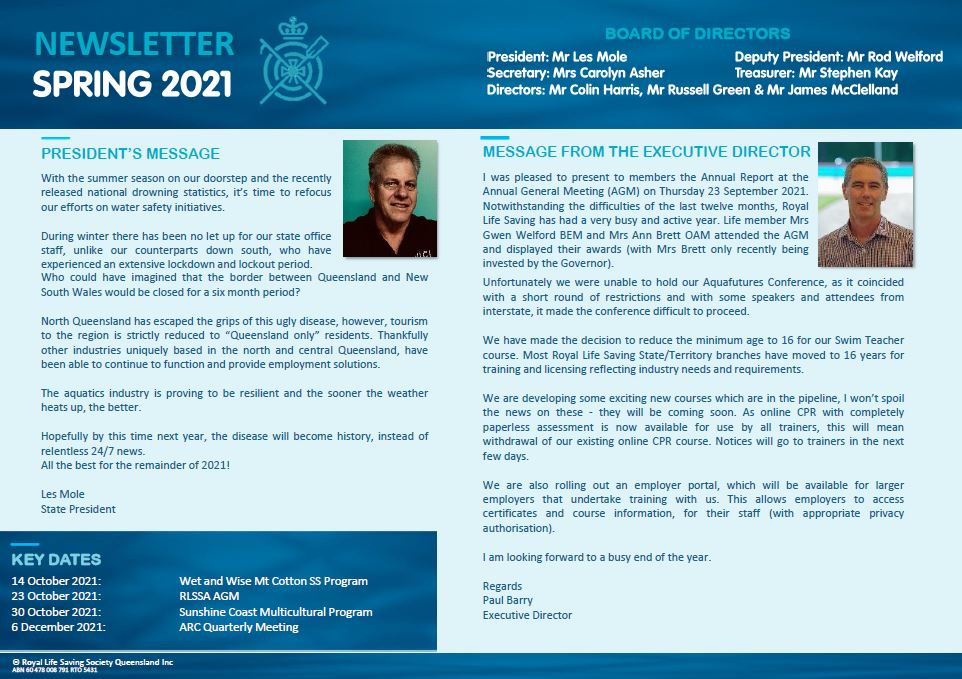
Royal Life Saving Queensland releases its spring newsletter. Please download our newsletter to read about the Airlie Beach Lifeguard Club, Volunteering Opportunities, the Australian Lifesaving Team, HM The Queens conference call, our projects update, and upcoming activities.
Royal Life Saving releases it’s annual report for the financial year (June 2021). The society continued to provide increased services to the Queensland community, with significantly increased activity in community programs, training and other activity.
Society President, Mr Les Mole said “I can only pass on a very sincere ‘thank you’, because without the proactiveness of our people, we would not achieve as much as we do”.